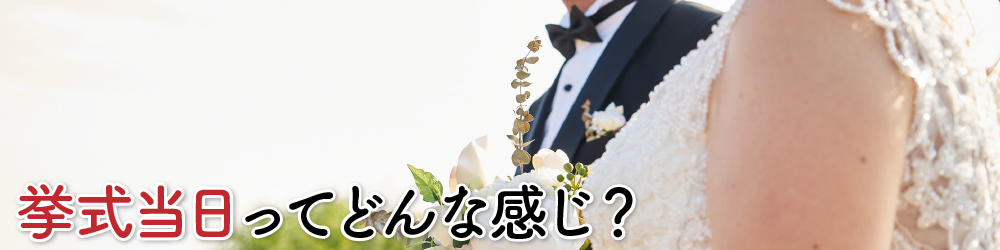
挙式の間は、余り飲食出来ないのであらかじめ腹ごしらえをしておく事をお薦めします。
当日の洋服は、着脱がスムーズな楽な服を準備した方が良いです。
花嫁さんが涙を流した時の為に花婿さんは、ハンカチをそっと差し出すと好感をもたれます。
殆どの方が新婚旅行に出発される事になると思われるので海外の場合パスポートだけは、どちらかが一緒に所持する事をお薦めいたします。
その他何か忘れてもクレジットカードか現金があれば何とかなります。
挙式当日の動き方をおさらい!
 挙式当日は、新郎新婦共に初めてお会いする方ご両親のお世話なった方仕事関係の方大勢いらっしゃるはずです。
まず第一印象は、とても重要です。
緊張をほぐす為にも広角を最大限引き上げて鏡を覗いてみましょう。
プロが施してくれたヘアーメイクで自信を持って式場に入場して行く事が出来ます。
挙式披露宴は、僅かな時間なので少し窮屈と思うでしょうが一生からするとほんの一時のことです。
自分たちの為に大勢の方が貴重な時間をさいて足を運んでくことを考えると感謝しかないと思います。
身内か友人に自分たち意外の方々の写真をなるべくたくさん撮っておいて貰って後日一言添えて
お送りすると良いです。
招待された方々も着飾って来ているのできっと喜ばれるでしょう。
挙式当日の新郎・新婦の1日の流れについて
 結婚式の当日はなにかと慌ただしいので、1日の流れを事前に確認しておくことはとても大切です。
当日は、「会場入り」「着付け・ヘアメイク」「写真撮影」「リハーサル」「挙式・披露宴」「二次会」というのが一般的な流れで、まず、会場へは遅くても新郎は2時間前、新婦は3時間前に到着できるように家を出ることが大切です。
会場到着後はすぐに着付けとヘアメイクとなりますので、新婦はできるだけノーメイクで髪にも整髪料など付けずに来るのが理想です。
新郎は新婦ほど準備に時間がかからないため、新婦が来るまでプランナーや会場スタッフに挨拶をして回ります。
続いて新郎新婦のみと親族を交えた写真撮影に入り、そのまま両親と新郎新婦で式のリハーサルとなります。
次が挙式本番ですが、挙式自体は教会式や神前式などに関わらず所要時間は1時間未満で、入場・結婚の宣誓・指輪の交換が一般的なプログラムです。
続く披露宴の平均時間は2~3時間と長丁場ですが、挨拶などで料理をあまり食べられないことが多いので披露宴前に軽食を摂っておくことをおすすめします。
披露宴終了後は会場の入り口に移動してゲストのお見送りをした後に着替えて結婚式場へ料金を支払い、必要に応じて二次会へ参加となるのが大まかな1日の流れとなっています。
挙式当日に受付などであいさつする場合の言葉
挙式に呼ばれた場合、当日受け付けであいさつをする場合にどうしたらいいのか迷う人は多いです。基本的に凝った物は必要ありません。
受付で「本日はおめでとうございます」で十分だといいます。受付だけではなく、新郎新婦の親族やご両親にお会いしたときにも、まずはお祝いの言葉を述べることが最低限招待された側としてのマナーです。
受付でおめでとうと言った後に自己紹介をすることも忘れないようにしてください。自分が新郎・新婦どちらの側で招待されたのか明らかにしないと、受付の人も新郎新婦の親族も困るからです。
必ずどちらから招待されたのか、自分が誰なのかを明らかにして申し込むことが重要といえます。
挙式は大切な2人の門出を祝う重要な物である以上、相手にとって負担とならず、式に傷をつけないような言葉であいさつすべきです。基本的なマナーができていれば問題ありませんが、礼儀正しくすることである程度のトラブルを避けてできるといいます。
挙式当日に生理になるかもしれないことを考慮し準備しよう
女性の中には結婚式に憧れている人が多いです。特にそのなかでもウエディングドレスに憧れ、その純白なドレスに夢を抱いている人も多いのです。
しかし女性にとって結婚式は、浮かれてばかりいることはできません。それはきちんと準備や段取りを決めていかなければならないからです。
結婚式場を決めて予約をし、挙式の模擬練習にウエディングドレスの選定、料理メニューや席次など次から次へと決めていく必要があるんです。
さらに女性が最も忘れてはいけないのが、挙式当日に生理周期が当たらないかという点です。挙式の当日に思いがけず月経が有ったら、純白のウエディングドレスも安心して身に着けてはいられません。このように人生で最も大事な挙式の日にドレスを汚さないためにも、自分の生理周期を把握し、基礎体温を測っておくことも大事なのです。
万が一月経と結婚式の日が合致しそうであれば、婦人科に相談しピルなどを処方してもらい月経を遅らせるようにしなければなりません。
挙式当日の朝食はどうしたらよい?食べ過ぎは厳禁
挙式当日の朝食はどうしたらいいか、事前に確認をしていて気になったという方は要チェックです。基本的に毎日朝ごはんを食べない方でしたらいつも通りで良いでしょう。
しかしそれは挙式までの時間によっても変わってきますし、式の準備の段階で食事をとる時間が少しでもあるようでしたらその時でも良いです。
もし準備をしてすぐに撮影~挙式という流れがあるばあいは結局式の途中には食事は出てきますが、ほとんど食べる時間が無いと言っても過言ではありません。皆さん終わってから空腹で大変だったという事を上げることが多いです。
朝食は出来れば食べた方が良いですが、女性でドレスを着る場合はあまり食べ過ぎてしまいますと、お腹が苦しくてドレスもきつくなってしまいますので要注意です。
特にぴったりめで採寸をしてドレスを選んでいる場合や、和装で着物を着るという時には食べ過ぎは気を付けた方が良いでしょう。何か食べた方が良いに越したことは無いですが、平常運転というのがベストです。
挙式当日を無事に終えるためにも体調管理には気をつけよう
結婚式を迎えるにあたって新婦さんは楽しみな気持ちに加えて、式を無事に迎えられるか不安になる気持ちを持ってしまう方が多いです。
また季節の変わり目は気温が安定しなく、体調も不安定になりやすいため、この時期に挙式を予定している場合は当日になって体調を崩してしまったということがないように、普段から体調管理をしっかり行う必要があります。
そこで安心して挙式を迎えるために、日頃から気をつけておきたい体調管理方法が栄養のある食事と充分な睡眠をとることにあります。
特に新婦さんは式当日までにダイエットやトレーニングを行う方が多いですが、体に負担をかけすぎるトレーニングや食事を抜いた無理なダイエットは体調不良に加えて肌や髪のコンディションが悪化する原因になります。栄養バランスを考えた食事と適度な運動を心がけ、夜更かしをせずに充分な睡眠を心がけましょう。
季節の変わり目は風邪やインフルエンザにかかりやすいので、手洗いとうがいをしっかり行い、外出する時にはマスクを使用するなど病気をもらわないように気をつけることが大切です。
挙式当日に気をつけるべきテーブルマナーとは
挙式当日、披露宴に参加される方は特に気をつけたいのがテーブルマナーです。結婚式での食事はフレンチのコース料理などフォーマルなものが多いため、気をつけるべきマナーを身につけておくことで、挙式当日に焦ってしまうようなことがないようにしましょう。
まず自分の席があるテーブルに着いたら、椅子には左側から座り席を立つ時も同様に左側からとなります。この時スタッフが席を引いてくれた時はそのままエスコートを受け入れます。
貴重品などを入れたバッグは膝の上に置くと食事中に落ちてしまう場合があるので、背中と背もたれの間に置きます。もし大きめのバッグの場合は右際の足元に置くようにすることが大切です。
フォーマルな食事で欠かせないナプキンは、乾杯の後に主賓がナプキンを広げた後のタイミングで手に取り広げます。
広げたナプキンは二つ折りにして、折り目側がお腹の方を向くようにして膝に乗せ、口や手元を拭く時にはナプキンを折った状態で内側を使って軽く拭くことがマナーです。
席を離れる場合は歩く畳んだ状態で椅子の上、もしくは背もたれにかけて離れ、閉宴後は軽く崩してテーブルの上に置きます。